Sabtu, 25 Maret 2006

Tuesday Column - Croatia Tourism 6: Boat Shows


Croatia’s Boat Show offering is not as geared to tourism as it might be but it’s expanding fast. Not so long ago there was just the Zagreb Boat Show, held in February each year. A fairly serious affair in an uninspiring group of buildings in New Zagreb, with no water to put the boats on and not much to encourage a family visit. Nonetheless it is worth the trip to see what’s going on in the industry as well as the sports industry in general. For more information on the Zagreb “Sport I Nautika” show, go to www.zv.hr/sport.

The Split Boat Show is in it’s 4th year and has overshadowed Zagreb for at least the last two. In its first year, it caused chaos on the Split Riva (promenade) and the locals were a little upset about it, particularly, as they’d heard that the exhibition stands were free and nothing was going back into the municipal coffers to compensate for the disruption. Now it’s a huge enterprise with the organisation to match it, and this year it will be on for 9 days from 1st April. It still does cause a little disruption to city life, with half of the Riva fenced in as part of the Show and one of the car parks halved in size. However it also brings a real buzz to Split and I’m sure is now a great boost to the local economy.

Compared with, for example, the London Boat Show, the Split Show still has some work to do to make it a family day out. There aren’t many distractions for children and there’s not too much in the way of accessory or clothes shops and stalls, but it’s getting there. It had its first mega-yacht section last year, which will no doubt expand in size and quality, but was a great start in raising the profile of this side of the Croatian Boat Industry. What is particularly impressive is the drive and enthusiasm of the organisers in turning an originally small show into a major event in such a short space of time. And, if you needed one, what a great excuse to visit Split before the hordes arrive for the summer. For more information go to http://www.croatiaboatshow.com/.

In the Autumn, another relatively new boat show takes place in Biograd. It’s organised by Marina Kornati, http://www.marinakornati.com/, and although not on the same scale as the Split Show it has a great atmosphere. Biograd itself is better known as a resort-type destination but there are plenty of interesting places to visit nearby if you want to make an off season break of it and perhaps take in some sailing to the nearby Kornati islands.

***

Croatia is making serious attempts to manage its burgeoning tourism industry. There is much discussion on improving the quality of the offering and extending the season. With the low cost airlines finally putting Split on the map, now seems a great time to start thinking about making boat shows a part of the off season attractions.

Monday Column - Croatia Destinations 6: Sibenik


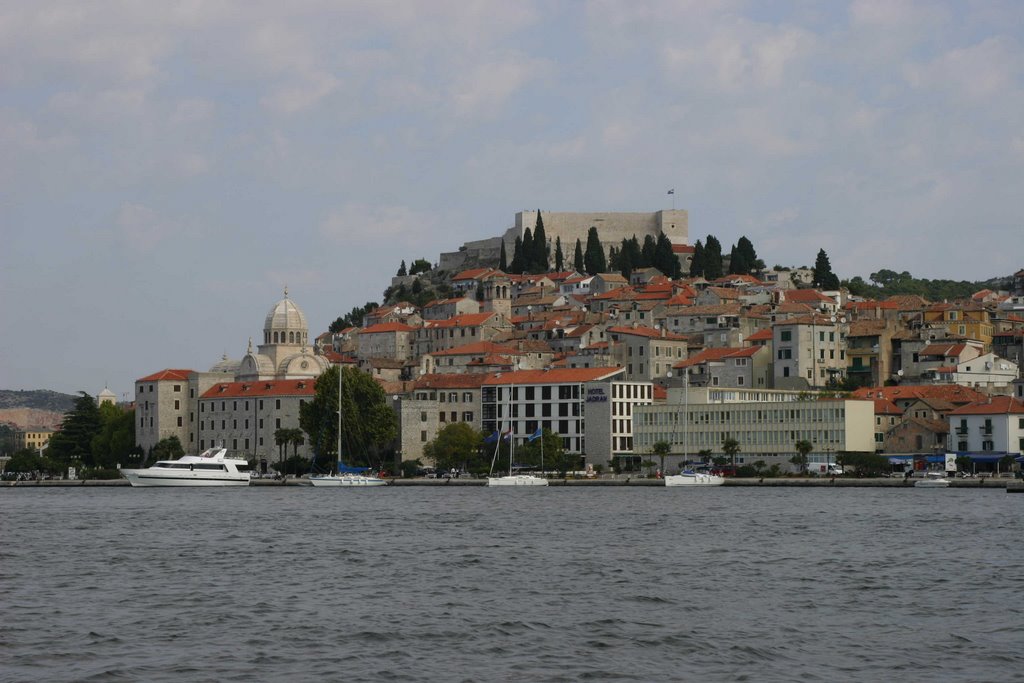
Sibenik is probably one of the most under rated towns in Croatia. Like Zadar and Split, it has sprawling and not very attractive industrial suburbs, but the long estuary leads to a charming and atmospheric old town. It’s a busy commercial port but has a town quay and two marinas in the course of development and at least another one planned, so it’s definitely a place to watch. The nearby Krka falls are spectacular and well worth one of the organised boat trips up the estuary.

Historically, Sibenik is unusual as it was founded by the Slavs rather than the Greeks and Romans, though it came under Venetian control in the 15th century. It suffered significantly in the homeland war due to infighting between the indigenous Croats and Serbs and has taken longer to recover than other towns. That being said, its location and natural assets make it ripe for further development. The spectacular cathedral took over a century to build - through lack of funding, disputes on location, plagues and a fire - and is therefore a fascinating mixture of architectural styles. Outside, carved in stone, are the faces of those people who allegedly refused to contribute to the cost of building the cathedral. Inside, the baptistery is intricately carved and the vaulted roof of interlocking stone slabs is considered to be unique. The roof was badly damaged during the war in 1991 and it took a team of international experts to rebuild it.

If you have time, take a trip to St Anne’s fortress for breathtaking views of the old town, the estuary and the islands beyond.


Tourist Office
The tourist office is just by the church of Sv Frane and the ferry pier, Obala Dr Franje Tudmana 5, tel 022 214 411, fax 022 214 266, http://www.sibenik-tourism.hr/ .It used to be a good walk away, on Fausta Vranjica, so don’t be misled by older guide books. As always, there are plenty of private agencies dotted around the town.

Accommodation
Sibenik is not developed as a tourist centre and accommodation is currently limited in the city centre. There is however a big resort, Solaris, http://www.solaris.hr/, 7 km south of the city. In the town itself, try Jadran, tel 022 212 644 which is relatively basic but well located.

Entertainment
The first Croatian falconry centre is within 7 kilometres of town, on the road that leads to the village of Dubrava. It’s open to visitors in the summer between 09:00 and 19:00, tel/fax 022 215 169, and there are plenty of excursions to the nearby Krka waterfalls further up the estuary from Sibenik. Through the summer, there are numerous music evenings as well as the renowned international children’s festival. For diving try Neptun-Sub, Draga 4, tel/fax 022 331 444, 098 642 009 or Otok Mladosti, Trg Republike Hrvatske 3a, tel 022 216 089, fax 022 212 551, http://www.otok-mladosti.hr/

Eating Out
To soak up the atmosphere of Sibenik and sample traditional food in style, try Gradska Vijecnica in the old Venetian town hall building in the main square opposite the cathedral. Trg Republike Hrvatske1, tel 022 213 605. One of the most well known restaurants in Sibenik is Uzorita, Bana Josipa Jelacic 50, tel 022 213 660. It’s about half an hour’s walk uphill from the centre, near the football ground, and specialises in seafood in a traditional Dalmatian building, suitably decorated, with courtyard, dating back to 1898.

Beaches
It’s best to head out of town for beaches, ideally to the pristine waters of the nearby islands of Zlarin or Prvic or in the Hotel Solaris complex.

Jumat, 24 Maret 2006

Croatia Online - Entertainment News


It's amazing how the weather really does change people's moods. Today has been the first day of sun in Kastela for a while and everyone is smiling - long may it last! Perhaps the fact that it's Friday also has something to do with it.

Next week we are returning to our regular format postings but we just wanted to let you know of two innovative tourist offerings we have discovered:

Paint Ball

If you like splattering yourself with paint and enjoy war games, check out www.paintball-dalmacija.hr. They operate from Kastel Kambelovac, near one of our favourite restaurants, Baletna Skola.

Smoothies, Cocktails, Wraps and Meeting Place for Backpackers

Have a look at www.igotfresh.com for an organisation called Fresh, offering something a little bit different. They're a hangout for travellers in Korcula and Dubrovnik and serve budget priced smoothies and wraps with a mix of international flavours.

Enjoy your weekend and don't forget to contact us with your comments.

Senin, 20 Maret 2006

Improvements To Croatia Online


As regular readers will know, Croatia Online is on holiday from its regular format postings for a couple of weeks. These will resume next Monday and we'll be covering the normal wide range of topics. Sibenik will be the subject of Monday's Destinations Column - a very under rated city with a surprisingly appealing centre. Boat Shows will be the focus of Tuesday's Tourism Column with the Split Boat Show coming up at the beginning of April and the Zagreb Boat Show just gone. Wednesday's Business Column will look at the Hotel Industry, Thursday's Lifestyle Column will look at driving in Croatia - bringing your car over, the roads and the rules - and on Friday we'll review the week's news as usual.

In the meantime, readers may be pleased to note that we have made it easier to search for older postings, by subject, and expanded our links section. If you want a full list of topics already covered by Croatia Online, just click on the link "Croatia Online- Postings Index". This will take you to a page of links with subject headings - click on the subject you want to read about and you'll go straight to that page on our site.

If you have any comments on any of the subjects covered, or on Croatia in general, we're always pleased to here from you.

Rabu, 15 Maret 2006

Property News


It seems that, with the ongoing enthusiasm of foreigners wanting to purchase property in Croatia, the rules are changing rapidly and existing rules are now being enforced more stringently. You may have seen an earlier report on the property market on this site (see below) in which we made a number of recommendations about eg seeking good professional advice. This is truer than ever before - what can appear to be a relatively simple property purchase transaction can trigger attention from a number of different authorities.

I’ve been following the Croatia Property and Home Website, http://www.croatia-holidayandhome.co.uk/, and Newsletters for well over a year now. Not only do they appear to be THE source of information for anything to do with Property in Croatia, but Martin Westby has managed to solve some problems that have left most local experts dumbfounded. Anything from how to transport furniture from the UK, to getting a licence to let property and most things in between. In a young property market, still lacking established mechanics, the only real way of dealing safely in it is to be prepared, have good professionals acting for you, and to make sure you are thorough in your preparation and legal checks. Martin has recently made available A Guide To Renting in Croatia. It’s available through the website for £9.95, or free to people who advertise their property with the site, and I’d suggest that it’s required reading for anyone who is thinking of purchasing an investment property and letting it out.

Martin has obviously had to work through almost every conceivable scenario over a period of time and it is this sort of experience that can be invaluable to a potential buyer setting out on the acquisition trail. We haven’t spoken to a single person who has had an entirely hassle free purchase so I’d definitely suggest that forewarned is forearmed. The document goes into a lot of detail about the various procedures that are required and hopefully will make the whole process a lot easier than going it alone.

So do your homework thoroughly and then enjoy your property and the delights of Croatia. It will be worth it!

Selasa, 07 Maret 2006

Croatia Online - Update


Readers will have noticed a pause in the hitherto regular daily postings. Unfortunately the author was unavoidably detained by the NHS on a short trip back to England and will no doubt be writing about this experience on her personal blogsite in due course. A comparison of health systems has also been listed as a potentially interesting and useful topic for Thursday's lifestyle column.

Now fighting fit, the author intends to get back to Croatia as quickly as possible, but will, however, be taking a busman's holiday, from Croatia Online, for a couple of weeks, as a result of some exciting new developments over in Croatia. Resisting the urge to offer repeats or highlights, we will be making periodic postings on the latest news, as it happens, during this period, before returning to the normal format.

Busman's Holiday - Time Out!

Time Out, one of the world's most famous and respected publishing brands, is launching in Croatia in a big way in 2006, with a guide book and a magazine - Croatia for Visitors 2006. We will be helping Time Out in a number of areas. Our feature on sailing is geared towards those who would love to sail but have little or no experience, and there's no better place to start than in Croatia. We're also making sure that local businesses in Dalmatia, and international businesses with interests in Dalmatia, have the opportunity to advertise, particularly those involved with nautical tourism - charter companies, marinas, travel agents, etc. Our business contacts in Croatia have been asking us for a while how to get to the right type of UK customers and now we have the answer.

EasyJet

Easyjet have just announced that they will be flying direct to Rijeka in Istria this summer which will open up the whole of the north of Croatia to cheap flights. Flights start on 30th June and will be four times a week on Monday, Wednesday, Friday and Saturday, with fares starting at £29.99 for a one way trip. Book online at www.easyjet.com Easyjet are also expected to make an announcement shortly about direct flights to Split.

We'll be catching up on the rest of the news over the next few days but it looks like Croatia is really on the map now!

Rabu, 01 Maret 2006

Thursday Column - Croatia Lifestyle 5: Eating Out


Dalmatia and Istria are very similar as far as food and restaurants are concerned. Dalmatia is the area we know best, and where most of our readers are based, but before we go there, a short word about inland Croatia.

Inland Croatia

Perhaps as a result of the colder climate, or the influence of Hungary, the food in inland Croatia is generally heartier with more sauces. Goulash is popular, paprika is a common addition, and pasta and pastries are more widespread. On the menu you’ll find a lot more stews and spicy dishes than you will along the coastline. In Zagreb, the capital, you’ll find a reasonably cosmopolitan mixture, including the odd Chinese or Indian restaurant, which are unseen elsewhere.

Dalmatia (and generally Istria)

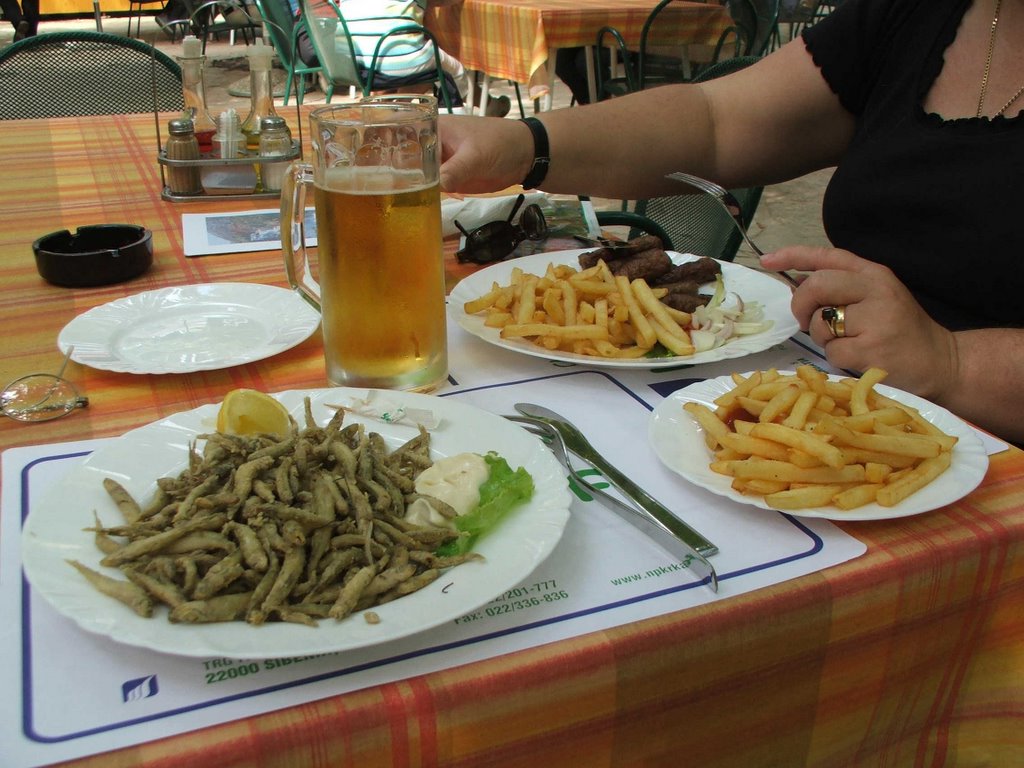
The food in Dalmatian restaurants is good but plain. Most things are grilled or fried and it’s rare to find a menu with many sauces included with the dishes. Steak with mushroom or pepper sauce is probably the most common and we have found a back street restaurant in Split which bucks the trend, but mostly it’s plain steak, pork, chicken, or fish with chips, vegetables or salad. Veal normally comes with a few choices – battered, with cheese and ham, or plain – and you’ll often get a spoonful of the bottled red pepper sauce to have with your steak but don’t expect much else. The one exception to this is Pašticada which is slow cooked beef stew, available in the bigger restaurants and often served at weddings.

There are of course, a number of different types of eateries and we tend to frequent the mid range ones so you may find that in the posher restaurants (“restoran”), normally attached to hotels or in big towns, sauces are more widely available. Certainly, in our konobas and gastionica, it’s plain meat and fish. As well as the traditional offers, Croatia has embraced pizzas and pasta and, I suspect, does them more justice than the Italian neighbours who came up with the idea.

Fish is really the Dalmatian speciality, not so much for the way it’s cooked but for its abundance, variety and, usually, freshness. It’s sold by the kilo, which can give you a shock when you first look at the prices, but half a kilo gives you a very big fish, probably enough for two, which will cost you between £12 and £15 pounds. Average size normally comes in at about £8. On the menu you will usually see Class I and Class II fish and we’ve heard differing explanations for this. In some restaurants we’re told that Class I means that its fresh local fish, caught on the day, and Class II is frozen or bought from a market or supermarket. In others we’ve been told that it’s the type and size of the fish that determines the class. Clearly you’ll be encouraged to buy Class I and I suspect the truth is a mixture of both stories and, cynically, may change according to what is available.

Steak is normally good (Beefsteak is the best) but very different from English steak – much younger meat and served in thick lumps with next to no fat - and pork steaks are normally good value for money.

As for vegetables, “Blitva” is a favourite and normally served with boiled potatoes. It apparently translates as mangold or swiss chard and is similar to, but better than, spinach. The quality of salads varies a lot and dressings are normally very simple. You often have to make your own and usually have to ask if you want to use olive oil rather than a cheaper variety. Dalmatia is not a place for vegetarians. We haven’t spotted a vegetarian restaurant yet and a lot of the vegetable dishes and soups are made with meat stock. A Pizza restaurant is possibly the best bet

If you like starters, the choice is mostly fish – risottos, mussels, scampi (but not battered!) squid, etc – but you may find mushrooms and there’s often a soup of the day which is normally very good. As for deserts, it’s anything as long as you like pancakes or ice cream!

As for liquid refreshment, Croatian drinking water is normally very good almost everywhere so don’t be persuaded to buy bottled water unless you want to. We finally discovered a fool proof way of asking for it, having been through a variety of permutations – “voda iz spina”, literally water from the tap. House wine varies in quality but at around £5 a litre you can’t be too choosy. If you are, then there are some quality local bottled wines around. You’ll probably get a glass of local herb brandy either before or after your meal and there are plenty of other aperitifs and liqueurs to sample.

So what will it cost? A main course, wine and a coffee in a konoba on the mainland is normally about £10, or less, per head in most places. If you have fish you may pay a little more. A large Pizza is around £3.50. On the islands, everything is a bit more expensive but not extortionately so. This is partly because of added transport costs and also because it’s a short season and a case of making hay while the sun shines. Exceptionally, in Hvar town on Hvar Island we found the prices to be about 50% higher than the mainland. No doubt an “it factor” surcharge!

As for etiquette, 10 % is a normal tip and whilst not exactly expected, is treated as a courtesy. Coffee is sometimes a problem as there is a tendency to turn the machines off at around 11 and generally you won’t find many restaurants staying open late at night. Booking works quite well in some restaurants but not in others. Outside the high season there’s normally plenty of space but in July and August, especially where there are large open terraces, prepare yourself for a bit of a free for all in popular spots.

Bon Apetit or Dobar tek as the Croatians say!