Senin, 17 April 2006

Croatia Online - Welcome Back From The Easter Break


Welcome back from the Easter Break. We managed to achieve most of the challenges we had set ourselves for the long weekend, except for the one that required the least effort – a lie in and a lazy day doing nothing in particular.

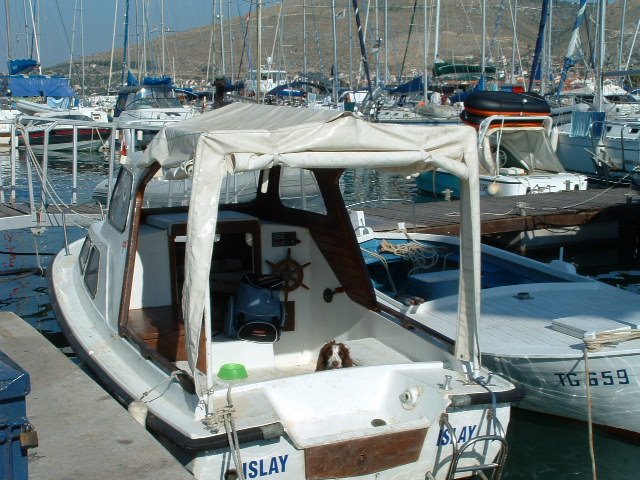
Our old fishing boat now has a very smart anti-fouled hull and is nearly ready to go back in the water. She just needs a little bit of care and attention on the deck but I’m leaving that to John’s expertise, hopefully with a little help from his friends. After all the washing, sanding, scraping and painting, we’re really looking forward to our first trip out this year.

We also managed to catch up with most of our friends, including a great day out yesterday in the hills behinds Split to help “warm up” a new house in the heart of the countryside. The weather in the morning wasn’t too inspiring but the rain cleared away in time for the barbecue to be lit, and then the sun came out just in time for the long steep walk to the top of the mountain behind the house. Today’s photo confirms that the strenuous walk was worth it.

It’s now 5pm on Monday afternoon so we plan to round off the weekend watching the sun go down at our beach bar. Then it’s back to work with a vengeance!

Out Of Season Tourism?

Our local bar is just a small little hut, by the beach, with a large terrace. During the winter it seems to be a refuge for hen pecked Croatian husbands of a certain age. The inside is packed with smoke and the cries of the winners and losers of the various “pub” games that are played within. As the weather warms, the hardier locals start to sit around the back, leaving the front to the tourists, but we count ourselves very lucky to have such a bar open all year round. We sometimes wonder how the owners manage to survive in the winter since the card players normally manage to make a small coffee last for several hours. Maybe that’s why most bars remain seasonal only. However, it’s difficult to see how those in the tourist trade are going to gear themselves up for the early arrivals on the new low cost flights. There may be a sudden surge in activity levels over the next couple of weeks but, if not, the new breed of out of season visitors may leave disappointed with the limited options for drinking and eating out.

Kamis, 13 April 2006

Thursday Column - Croatia Lifestyle 7: Easter Break


It’s easy to forget that we came to Croatia for the lifestyle rather than to earn our fortunes! Watching the ex pat documentaries on British television, it seems that we’re not alone in working twice as hard for half as much. Still, there are compensations and we’re intending to make the most of them over the Easter weekend. Our little Dalmatian fishing boat has now been repatriated and needs some work done on it before we launch her back into the water. She never actually left Croatian waters but was “exported”, quite legitimately, by her previous owner, partly because it was easier for him, as a non resident in Croatia, to register her, and also to avoid the Croatian VAT on her new engine. It’s not been the cheapest or easiest of exercises but, apart from wanting to be as Croatian as possible in our lifestyle, it also has the advantage of enabling us to use our local municipal marina rather than the more expensive tourist orientated ones. Our 20 year old boat looked a little out of place amongst all the swish yachts and cruisers but is now completely at home amongst the local private fishermen’s boats!

We’re also going to make a point of trying to see as many of our friends as possible – sorely neglected recently, with all the time we have spent working, and we are way behind on their news. One couple we know has tied up deals on a small house up in the hills past Split, and a restaurant in Split centre, so things can move quickly when you’re as determined as they are.

It’s not too easy to make friends with the Croatians and I suspect it’s a mixture of language/cultural barriers and the sort of reserve you find in places like Yorkshire. Still we do have a few good local contacts and we know we are accepted when we walk through the streets and get tooted and waved at. I’m looking forward to the day when I can hold a decent conversation in Croatian with them and believe that a degree of proficiency in the language will open a lot of new doors.

In the absence of yet being fully absorbed into the local community, we are lucky to be part of an ever expanding and sociable ex pat community and pleased to have made a few really good friends. Our lives all have very different rhythms but maintaining these friendships is very important to our quality of life out here and, so far, the Brits that seem to come to Croatia are a cut above the ones that pick, for example, the Costa del Sol. Certainly in the Split area, the network is informal and there’s a gap for some kind of “forum” which we have dreams of filling when other commitments allow. If someone gets to it first then we’d be equally pleased to give them our support. Until then, English speaking ex pats have a great propensity for finding each other in the most unusual of places!

As part of our personal commitment to Lifestyle, over the Easter weekend, we won’t be posting an article tomorrow so below is some recent news.

Croatia Exclusive Exhibition

It seems that a number of the more innovative exhibitors affected by the cancellation were able to divert to the Excel A Place in the Sun Exhibition and therefore retrieve something from the organisational shambles.

Tennis

Unfortunately Croatia, the defending champions, nursing a couple of injuries, have been knocked out of the Davis Cup by Argentina. It appears that England are out as well having been defeated by Serbia and Montenegro.

Economic, Judicial and Political Reform

A statement issued after a meeting of the Council for Stabilization and Association in Luxembourg suggests that Croatia continues to meet political criteria, but it should increase its efforts to reform the judicial and public administration systems to deter corruption and increase the freedom of the press. The Council is also increasing pressure on Croatia to move forward with the restructuring of the steel and shipbuilding industries. Without acceptable restructuring, any state support would be considered illegal. See our posting on the shipbuilding industry for more information - http://croatiaonline.blogspot.com/2006/02/wednesday-column-croatia-business-3.html

***

Sretan Uskrs!

Rabu, 12 April 2006

Wednesday Column - Croatia Business 7: Is Business in Croatia Doing You In?


Since last Sunday, when we finished our marathon haul exhibiting at the nine day Croatia Boat Show, and after following the repercussions of the failed “First Ever Croatia Exclusive Exhibition” in Earls Court, I’ve had no shortage of topical issues to feature in today’s Business Column. However I guess that those readers who aren’t into boats are a bit bored with the Boat Show, and those affected by the “postponement” of the Earls Court Exhibition would rather forget about it now. So this week’s column is a slightly introspective personal look at doing business in Croatia.

To put things in context, my partner, John, and I could probably fairly be described as old fashioned in our way of doing business. We believe in turning up to meetings on time, we know it is possible to plan our diaries around events fixed some weeks in advance, without forgetting them, and we firmly believe that it is more effective for all if everyone is as direct and open as possible in their business dealings, with, of course, due respect for confidentiality where it is essential. We could also perhaps be described as spoilt in our careers to date – king and queen of our own mini empires, working in established and well respected organisations and therefore not having to work too hard to have our voices heard and our efforts appreciated. In fairness to our Croatian hosts, it is perhaps not the Croatian business environment that continues to send culture shockwaves around our offices, but what we are trying to do and how we are going about it. This probably applies to most people trying to earn a crust in a foreign country.

If you’ve attended any management courses, you’re bound to have come across Ansoff’s Matrix. Even the very successful Beermat Guides (http://www.beermat.biz/) for salesmen and entrepreneurs, which generally and mercifully cut through the more esoteric management tools and theories, refer to it. Essentially the matrix has four quadrants which reflect the degree of difficulty of an organisation’s approach to expanding or improving its business. Selling existing products into existing markets is the easiest way to make money but when that market becomes saturated, and too many competitors force the prices down, it’s time to move onto stage two, selling existing products to new markets, then stage three, new products to existing markets, and finally, when all else fails, the “don’t go there” stage four – new products into new markets. Well, we started in stage four and that’s where we’ll finish!

We were reminded just how hard our core business model was when, quite recently, we had the opportunity to assist a well respected organisation moving, as we originally thought, into stage 2 of the matrix in Croatia. This was a real breath of fresh air, both in terms of finding a “supplier” with similar business ethics, and having a product that we knew was a market leader of great quality. However the reality was that it was a kind of hybrid stage 4. Although a similar product had been successful elsewhere, it was entirely new to the Croatians. Although our contacts are an existing market now to us, they were a new market for the new product and we had the greatest success with entirely new contacts. Bizarre.

The above is designed to give you some background and context within which to interpret the comments that follow. I’ve drawn parallels before, between Croatia and Ireland (http://croatiaonline.blogspot.com/2006/01/croatia-online-parable.html), and if we were asking for directions now from the Irish, they’d probably say “I wouldn’t start from here!” Having worked in Ireland for 18 months, about 10 years ago when conditions were similar, I should have known better.

So what exactly are the problems? Some of them are self inflicted by us and some of them are symptomatic of the growing pains of a transitional company. Croatia has arguably been held back by conflict, communism and bureaucracy for many years and has now had the touch paper of progress well and truly lit. The learning curve for Croatian organisations, getting used to doing business in a country that is trying to move so far so quickly, will be much steeper than ours.

Self Inflicted Problems

Hindsight is a wonderful thing and it does serve a useful learning purpose if applied with circumspect. If we were starting over again in Croatia, we would probably change the following:

1. Language

Although English is widely spoken, there’s no substitute to being able to chat freely with your potential customers in their own language. We’re learning Croatian hard now but should have done so earlier.

2. Portfolio

The Croatian market, with a population of 4.5 million, is just not big enough for any organisation to earn a bread and butter living from a niche sector, with only a small capital investment, unless it’s within the catering industry or unless you’re selling an essential, rather than a luxury product. You need a number of strings to your bow and enough alternative income not to have to count on Croatia for a couple of years.

3. Initial Investment

If we’d been able to, we would have persuaded our suppliers to commit some extra funds, and found some ourselves, to speed up the process of recognition of our products in Croatia. The overall cost of getting to the same stage would probably have been the same but we’d have got there quicker. As a counter argument to this, one of the things that has stood us in most stead is that we have stuck at it. The Croatians have seen a lot of initially excited foreign entrepreneurs dabble in their market and then disappear. That’s something that we’re still tarred with but much less so now after nearly four years.

Intrinsic Problems

1. Early Recognition

Borrowing from a Beermat principle (see above) you need to find a Croatian entrepreneur who will champion your product amongst his contacts. Once someone has it, others will follow and the local network is more powerful than most other marketing or advertising tools within Croatia itself. Croatians can tell which village someone comes from by their surname and anyone in business will have been to school with some influential contacts elsewhere. They can get you a meeting when no end of emails and telephone calls might go unanswered.

2. National Pride

Croatians, particularly Dalmatians, are understandably very proud of their country, their resources and their skills. That can make it even harder to convince them that a foreign product is worth having, even if there is no local competitor. If a similar product is made locally then you really do have an uphill climb to convince Croatian customers of the advantages of your product, even if they are significant.

3. Bureaucracy

Croatia Online has probably said enough about this already. Red tape exists on a huge scale sufficient for some organisations, depending on their sector, to be unable to plan their business at all in the long term. Some of the red tape is already likely to be judged un competitive and hopefully Croatia’s wish for early EU entry will help speed up the removal of obstacles in certain areas. Red tape affects local and foreign business equally but the local entrepreneurs have a better chance of finding the right person to “help” them get round it.

4. Corruption

The news reports suggest that Croatia is not doing enough to stop the corruption that goes hand in hand with undue bureaucracy. We haven’t come across it much but whenever there’s a bit of mystery surrounding business negotiations, or a sudden reversal in interest, it’s not difficult to imagine that someone has got what they want from elsewhere. Alternatively, you’ve been led to believe you’re talking to a decision maker when you’re not – see below.

5. Management Culture

Old systems die hard and the “IBM culture” still prevails in large organisations, ie the safest option normally wins since no one wants to stick their head above the parapet. In smaller, privately owned organisations, autocracy rules which is great if you find yourself dealing with a benevolent dictator and not so great if the boss doesn’t take a shine to you. The best organisations to deal with are those that are run by “returnees” – Croatians who have worked abroad for a number of years and come back home. They share the same frustrations with the bureaucratic regime, have a more modern and open management style, and are prepared to take more risks in order to be successful. Moreover, they tend to empower the people below them rather than treating them as glorified clerks.

6. The Economy

Despite the increase in tourism, which accounts for about 20% of Croatia’s GDP, Croatia is still a relatively poor country. Furthermore, the government and the banking system are not yet geared up to encourage long term investment for growth. Organisations in the tourist industry have incredibly seasonal cashflows and it’s not so long ago that their business worlds collapsed when the Homeland War broke out. Memories fade slowly and its important to get the timing right when seeking to sell to organisations involved in tourism.

7. Time Wasting

You can waste a lot of time, making multiple phone calls to organise one meeting, only for it to be delayed, postponed or simply not have the person you are meeting turn up. In the early days of a business, you feel you have to follow up every single lead, but as time progresses, you do get to know the signals of a serious businessman rather than a dreamer, though there is always that fear that the most disorganised person you have ever had to deal with is the one that will make your fortune.

8. Traps

Many business contacts we have talked to, local and foreign investors, feel they have put so much time, money and effort into the Croatian market that they must carry on, despite all the signs suggesting the contrary. Croatia may have a different business culture, compared with western European economies, but it’s important to retain a sense of proportion and not forget essential principles of business. Almost everyone gets very excited about the potential but if this potential does not turn into reality for your business, within a reasonable timescale, you are in danger of burning a large hole in your pocket and joining the ranks of “dreamers” rather then entrepreneurs. If you’ve followed through on your initial business plan, have given it adequate time, and are still well wide of your targets, don’t throw good money after bad. Walking away from something may be one of the hardest business decisions you can make but not taking the decision is probably the worst mistake you will ever make

***

Despite all the above, Croatia is a great place to live and becoming an easier place to do business in. Zagreb is a cosmopolitan city and dealing with business people there is much less of a culture shock, for western Europeans, than negotiating with their Dalmatian cousins. That’s no different from most countries in the world. We have found some great people to work with – reliable, on time, honest about their capabilities and enthusiastic about new ideas. However, unfortunately that’s still the exception rather than the rule though, in fairness, Croatians might say the same about the foreigners they have dealt with.

Our plan is to stay focused but flexible, adapt to the rapid changes, build our portfolio around those whom we trust and are committed and sincere, and develop the areas that provide the best return with the least bureaucratic obstacles. After all, we left the city rat race to have some fun as well as earn an honest buck!

Senin, 10 April 2006

Tuesday Column - Croatia Tourism 7: Guides and Tourist Information

When we first came over here, almost four years ago, we could only find one guide to Croatia generally available in the bookshops. A year after that there were a number around though most in their first or second edition. Now you have Lonely Planet, The Rough Guide, Eyewitness Travel and Footprint, to name but a few. However, the tourist industry is changing so fast that it’s good to hear there is a brand new guide from Time Out Publications, due out next month.

Not only is Time Out producing a Guide Book but also a magazine for visitors to Croatia, on sale in most international cities and airports. The magazine is a first for Croatia and will be exploring a number of topical issues as well as supplying the standard listings. Features include the property market and sailing in Croatia. The property market is beginning to settle down and become a much more attractive proposition than it was when it was fuelled by hype. As for cruising the Adriatic, it has to be the ideal way to take in the best of what Croatia has to offer. Croatia has no major tides or currents, over 1000 islands to explore and great Mediterranean weather, so it’s one of the safest places to learn how to sail. There are a large number of reputable charter companies – international names and local companies – and all will provide skippers for inexperienced sailors at an additional cost of about €120 per day. So there’s no excuse not to try it!

Apart from the guides, you have the National Tourist Board – see our links section – and this is a good place to start when you’re looking at specific destinations. However it doesn’t contain the more detailed information that is available on even the smallest village so try the local tourist boards listed on the main site. Croatia is rich in history as well as natural assets and there is a mine of information available on the web, if only you can find it. In our Monday columns, on individual destinations, we try to give you as much information as you can to help you find out the real story on the places you have decided to visit.

If you intend to sail Croatia then again there are a number of guides around. The Croatian Hydrographic office (HHI) has recently issued its first Cruising Guide in English. However it is based on the Croatian version which was written a few years ago and is now a little out of date. Similarly, Imray published the fourth edition of its Adriatic Pilot in 2004 but things have moved so quickly that again, it’s become a little dated. The good news is that Nautical Data are publishing a Cruising Companion on Dalmatia later this year and at this stage, I have to declare myself as co-author. Modesty aside, it’s based on our detailed knowledge of the coastline and marina industry, based on travelling around Croatia for four years, by sea and on land, and should be the most authoritative guide to sailing in Dalmatia for some time.

***

Sorry - no picture today, as yet. Blogger is not co-operating!

Monday Column - Croatia Destinations 7: Vis


Vis island was Croatia’s first main defence against aggression from the sea and there is much evidence of its wartime past. It was Tito’s stronghold during the Second World War, there are old artillery posts high up on the hills, a number of submarine caves, and it was the last Croatian island to open for tourism after the war. It has therefore stood still in time longer than its neighbouring islands and has a more British feel to it as a result of its history as an allied base. It’s very popular in the summer, especially with Superyachts, but we spent Christmas there in 2003 and were the only guests in the only hotel that was open. There are two main settlements; the town of Vis, on the north side of the island, and Komiza on the west. Both are great places to stay though we preferred the cosier feel of Komiza.

Ferries run regularly from Split to Vis town – a scenic two hour trip past the islands of Brac, Solta and Hvar. Click on http://www.jadrolinija.hr/ for more information on ferries.

VIS TOWN

The town is spread around the large bay and has a few relics of interest including Roman Baths, a British Cemetery, Fort Wellington and the George III Fortress. It is now the island’s wine and agriculture centre.

Vis has all the facilities you would expect of a town this size, located mostly close to the shore – markets, banks, shops, post office, etc, however there seemed to be less restaurants than the Croatian “norm”. We had good pizzas at Dionis, which is open all year round and about a 5 minute walk east from the visitors boat moorings. Matije Gubca 1, tel 021 711 963, fax 021 711 126. The restaurant in hotel Tamaris is conveniently in the centre of town but lacking in atmosphere. Instead try Villa Kaliopa, near to the town museum on the eastern side of the bay, Vladimira Nazora 32, Kut, tel 021 771755. It’s not cheap but the setting in a walled garden is superb. Also worth a try in Kut is the popular Konoba Vatrica, Kralja Kresimira IV bb, tel 021 711 574 and the more rustic Tezok, Kralja Kresimira IV bb, tel 021 711 271. The best beach is by the Hotel Issa, west of the centre of town. There are a couple of ferries per day between Split and Vis and you can hire cars and scooters via the numerous agencies advertising on the sea front. Buses run between Komiza and Vis to coincide with the ferries.

Useful Information

Tourist Office: Near the ferry terminal, Setaliste Stare Isse 5, 21480 Vis, tel 021 717 017, fax 021 717 018, http://www.tz.vis.hr/

Post Office: On the eastern side of the bay, Obala Svetog Jurja 25, 21480 Vis, open 07:30 to 21:00 Monday to Saturday in the season, otherwise 07:00 to 19:00 Monday to Friday and 07:00 to 13:00 on Saturday

Medical Centre: Poljana Sv Duha 10, 21480 Vis, tel 021 711 633

Pharmacy: Vukovarska 2, 21480 Vis, tel 021 711 434

Dodoro Diving Tours: Kranjevica 4, 21480 Vis, tel/fax 021 711 347, www.dodoro-diving.com.

KOMIZA

Komiza is a traditional fishing village and famous for a sail powered wooden fishing boat – The Gajeta Falkusa. It’s another favourite place of ours for its lovely stone buildings, compact size and friendly atmosphere.

The tourist office is just past the root of the pier and there’s a cash point next door. Walking a little further around the bay you’ll pass the fishing museum and a number of bars. The market is a little further on and the post office further still. Konoba Bako is a great seafood restaurant with its own small beach, Gunduliceva 1, tel 021 713 008, and there’s a wide choice of other restaurants. Trips to the blue cave on Bisevo island go from Komiza and the tourist office will give you all the necessary information. The ceremonial burning of a traditional fishing boat takes place on 6th December and there is a fisherman’s night on the first Saturday in August. Buses run between Komiza and Vis to coincide with the ferries.

USEFUL INFORMATION

Tourist Office: Riva 1, 21485 Komiza, tel 021 713 455, fax 021 713 095, www.dalmacija.net/komiza, tzg-komize@st.htnet.hr

Post Office: Hrvatskih Mucenika 8, 21485 Komiza. Open in the season, 08:00 to 12:00 and 18:00 to 21:00 Monday to Saturday, otherwise 08:00 to 14:00 Monday to Friday and 08:00 to 13:00 on Saturday.

Medical Centre: San Pedra bb, 21485 Komiza, 021 713 122

Pharmacy: Podspiljska bb, 21485 Komiza, 021 713 445

Jumat, 07 April 2006

Croatia On Line Comment - Exhibitions and Boat Shows

Croatia Online's week has been dominated by the Croatia Boat Show in Split and distracted by the failed "first ever" Croatia Exclusive Exhibition in Earls Court (see earlier postings).

The hot news at the Boat Show, according to the front page of the Dalmatian Daily, Slobodna Dalmacija, was the scandal caused by two Slovenian hostesses on one of the stands, who agreed to be photographed topless for 600 kunas each (about £60). The cynic in me can't help wondering whether this was a publicity stunt for the exhibitors (no pun intended), the organisors, or both. Anecdotal evidence suggests that turnout is down, either in spite of, or because of, the marathon length of the show - 9 days.

As for the embarassment of the Croatia Exclusive Exhibition in Earls Court, we've still to get right to the bottom of that too (again, no pun intended) but the more I hear, the more it sounds like an enthusiastic or misguided entrepreneur forgetting to do a business plan but attracting a number of "big names" along the way. I trust that the Croatian Tourist Board and other government backed institutions will do their research more carefully in the future, before they lend their names or are used to add credibility to an unproved, newly formed company putting on an event that only hopefully presumed to represent the whole of what is good about Croatia? Perhaps the government should have put Croatia Exclusive Ltd through the same rigorous tendering process that they insist on when they spend their money elsewhere? Or is this a selective/subjective process?

Kamis, 06 April 2006

Croatia Online - Boat Show Special 3

Mike Forbes, the author of the article referred to in Boat Show Special 2 below, and Sailing Today, the publishers, have kindly agreed to allow us to reproduce the text of an article that appears in the April 2006 edition of Sailing Today.

***

Coping in Croatia by Mike Forbes


The Dalmatian islands of Croatia provide some of the best cruising grounds in the Mediterranean, some say the world. An area which boasts crystal-clear water, uninhabited islands, deserted bays with minimal tides and currents, has been one of the best-kept secrets of the cruising world. Charter companies have not been slow to exploit this and there has been a steady increase in the numbers of bareboats and flotillas plying the Adriatic coastline.

Croatia also provides a welcoming base for private yachts, especially from the United Kingdom. A mere two-hours flight to Split or Dubrovnik makes it an attractive alternative to basing a vessel in other Mediterranean or even Caribbean ports. Not, yet, being a member of the European Union means that VAT payment can be deferred for foreign-flagged yachts and prices have not yet reached the heights of other European maritime countries.

One sensible route to yacht ownership has been for several families to share the purchase and operation of a boat. Few boat-owners can afford the time to make the most of their investment, while the costs of buying, fitting out and operating a yacht are beyond the means of many families, especially those with young children. Given a written agreement, in our case with a clause not to lend or charter, yacht-sharing has brought regular holidays in the Mediterranean to many who might otherwise only be able occasionally to charter.

But in March 2005, these multi-owned boats received a nasty shock. The Croatian authorities, determined to crack down on private owners illegally undercutting the charter companies by inviting paying guests, imposed a limit on the number of people foreign-flagged vessels could have on their boat during the validity of an annual Permit to Sail. Initially this limit was set at twice the legal capacity of the boat, but they quickly increased this by 15% to 2.3 times capacity. Thus a 40 ft yacht with a capacity of 8 would be limited to carrying a total of 18 people throughout the year in Croatian waters. This number includes the owner and his family and a boat owned by, say, four owners would have to share this number between them. At first, the limit included children; in my case, my 12-month old grandson had to go on the List of Persons, the official inventory of the named crew and guests. Later in the summer, an edict from Zagreb, the capital, was handed down which stated that children under 12 need not be entered on the List. For us, seven places were freed up by this relaxation.

Lobbying of Harbourmasters, who authorise crew lists and issue the paperwork, the British Consul, the Ministry of the Sea, Tourism, Transport and Development in Zagreb and even the Croatian Prime Minister, resulted in no exemptions or relaxation of the Rules. It did, however, reveal two ways that we could navigate our way through the regulations. First, embarking guests outside Croatia, or disembarking them outside Croatia, would mean that they did not count against our limit. Also, people who stayed on the boat in a port or anchorage need not be on the List. This resulted in our changing crews in nearby Montenegro, incidentally introducing us to the delights of that country, hardly a valid aim of the Ministry which included Croatian Tourism in its portfolio. We also asked one of our guests to follow us around the islands by ferry so that we stayed within the rules. She took it well, but it was hardly the holiday she or we had envisaged.

There is little doubt that the Rule has been successful in reducing black chartering. Many yachts have left Croatia for other countries. According to the Croatian Ministry's web-site, in the first 8 months of 2005 their nautical ports registered 3% less visitors than the same period in 2004. For August 2005, the figures were down by 11% on 2004. The way the rules have been framed penalises legitimate multi-owned vessels, but the Law of Unintended Consequences is not a phenomenon restricted to Croatia.

We have tried to be constructive because we do not want to join the procession of yachts going south to other countries. We have proposed to the Ministry that people bearing the same surname as any of the registered owners be excluded from the List of Persons. Legitimate families would be protected while reference to passports could bowl out any guests adopting false names. We await a response, but we are, like many other owners, examining our options on where we base our vessel.