Selasa, 28 Februari 2006

Wednesday Column - Croatia Business 5: The Banking System


The number of recent changes in the names of High Street Banks suggests that the Croatian banking system is going through a period of rapid change. Statistics tend to confirm this. In September 2o03 there were 20 foreign owned banks, 21 private Croatian owned banks and 2 state owned banks. Back in 1999 the numbers were 13, 30 and 10 respectively. For a nation that generally seems to resist the pressure to privatise, Croatia seems to have embraced the principle of foreign and independently owned banks, and I suppose that, by now, the number of foreign owned banks may be larger than the number of locally owned banks, state or private. Going from 10 state owned banks to just 2, over 4 years, shows that it can be done! Perhaps of more significance is the fact that the 20 foreign banks in existence, in September 2003, owned 90.8% of the total banking assets, compared with 39.9% in 1999. In general it seems to be the Austrian banks that are the most active, both on the acquisition trail, and in investing in a range of Croatian businesses.

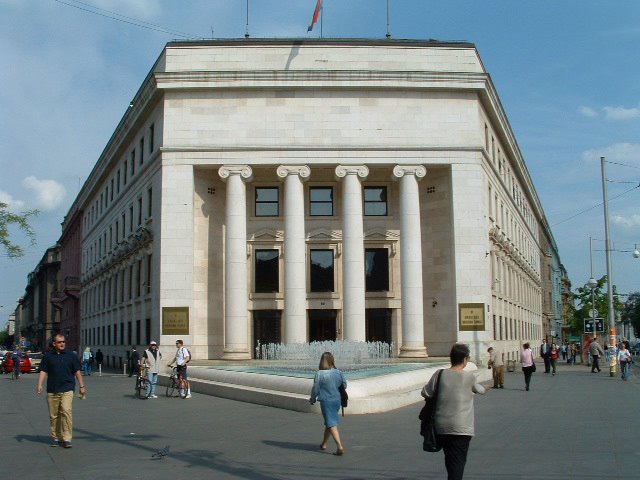
The Croatian National Bank is wholly owned by the state. In principle, it operates independently but is responsible to Parliament. It has a very demanding job which includes, on top of the normal banking operations, maintaining the stability of prices and formulating and implementing foreign exchange and monetary policy. It has achieved these aims with some success over recent years, keeping inflation low and the exchange rate steady. External debt and the country’s balance of payments have proved more difficult to manage but are not part of its direct remit.

The legal framework for the banking system was largely brought in line with EU models by a law passed in 2002. Croatian banks do not seem quite as obsessed with money laundering regulations as their Western European partners so let's hope it strikes a more sensible balance when it addresses this issue. Practically it’s relatively easy for individuals to open a bank account though there’s a bit more paperwork for businesses. That’s where simplicity stops.

It is difficult to make payments in a different currency from the one your account is nominated in, so most companies have an account for each currency. It’s also sometimes difficult to make payments overseas due to foreign exchange rules. If operating from a company, be prepared for a grilling by Fina (the state owned audit body) and to withhold 15% on payments for services to foreigners. Cheques are not widely used, instead you have something like a bank giro credit, similar to the old Irish method. Credit cards are reasonably ubiquitous but not so widely accepted as in the UK, but there are more than enough ATM’s - just as well for a country where cash still remains King. Mortgages are generally not available, loans are hard to get unless you're a very large company, and leasing is slowly developing but mostly restricted to traditional assets with a reasonable resale value.

The Croatian banking system is reminiscent of the UK banking system some 5 to 10 years ago, in terms of organisation and technology. Internet banking is coming in, mostly via the foreign owned banks, but only very slowly. The lack of queuing systems in most banks is a constant source of stress – remember the days you had to try and pick which queue was going to move the fastest and always failed? And there’s rarely a chance to conduct your business privately - usually at the counter in full view. Despite that, there’s a reasonably efficient, if sometimes officious service, but little sign yet of banks proactively competing for business.

Senin, 27 Februari 2006

Tuesday Column - Croatia Tourism 5: Klapa Music


One of the real delights of Croatia is its Klapa music. Simply put, it’s multi part harmony singing, nearly always by men, and, in its purest form, without any musical accompaniment. Deep bass, baritone and tenor voices tend to dominate, in contrast with the generally higher pitch of the better known and vaguely comparable US barber shop quartets. Quite often, in a restaurant frequented by locals, a table of 12 can strike an opening note and then sing in perfect harmony, each in a different key. The songs are normally stirring national songs with “Dalmatia”, “love” and “the sea” featuring very often in the lyrics. Even without understanding all the words, just the mood it can create can be enough to bring tears to your eyes, those of the grown men singing, and have you touching your chest in salute. Guitars and mandolins sometimes appear from nowhere, and soon you have a unique evening’s entertainment in your favourite restaurant or occasionally in someone’s house. The spontaneous renditions are the best but there are also plenty of organised concerts in the summer.

For the historians and fact lovers amongst you, the word Klapa means “a group of people” and the genre traces its roots to choral singing. It’s a form of “a capella” music which is an Italian phrase for “from the chapel” and, given the influence of Italy on Croatia in the past, perhaps the Croatian word grew from the same root as the Italian phrase.

If you want to experience it for yourself, ask around the local restaurants and see if the staff will let you in on the secret of when the local groups' are likely to be about – they often rehearse in the backrooms. Failing that, in July and August, the summer festivals are bound to have plenty of Klapa on the Bill, so go to the local tourist office and get the programme of events. Even if you’re in a small town with no real Summer Festival (and it has to be quite small for that!) there’s a good chance that there will be a few open air Klapa concerts about. As a last resort, go and buy a CD. “Songs of Croatia: Klapa Singing from the Dalmatian Coast”, by Klapa Kambi/Klapa Jelsa, seems to be reasonably widely available in the UK and there are plenty of Klapa CD’s at the Bye Bye Shop at Zagreb Airport. Not the same as the live experience but a good place to start.

2006 looks like being a big year for Klapa, with the Croatian Heritage Foundation in Zagreb organising a calendar of events intended to feature expatriate Croatian Klapa singers, together with local groups. Provisional plans are for the tour to start on 24th June in Zagreb and work its way south to Omis by 2nd July. Sounds like its not to be missed.

****

Apologies for the quality of today's photo – there’s generally a mad rush to the front when the singing starts and the politicians and military always seem to get there first!

Minggu, 26 Februari 2006

Monday Column - Croatia, Destinations 5: Livno and Kupres


This Monday we are straying outside strictly Croatian territory to have a brief look at two towns in Bosnia that are just a short drive away from Split – Livno and Kupres. On Friday I suggested they were an hour and two hours drive from Split respectively. I think two and four hours might be more realistic. Looking at the map, it should be somewhere in between but we have always gone there with our good friend Zdeslav, who knows so many people along the way, that we have never managed to get directly to either town without having at least three coffees en route. That’s one of the reasons we have such good memories of our visits – the locals that we met may not have been very rich but they always rolled out the red carpet for us.

Both towns are in the Croat part of Bosnia and Hercegovina and you will therefore find a high percentage of Croats amongst the population. Both towns, especially Kupres, suffered quite badly during the Homeland War, and we had some friendly but insightful discussions, with some of the residents, on how post war politics and diplomacy were perceived by those living with it. You may still see some evidence of the war – roofless buildings and a few bullet holes for example - but there seems little question that life has long since returned back to as near normality as possible. That being said, there are no signs of overt tourism as yet and I can’t help wondering just how long these two unspoilt and beautiful destinations will remain a secret.

Livno

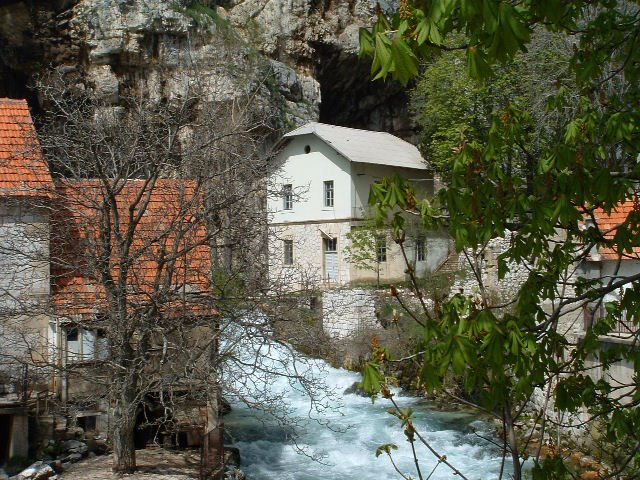
Livno is on the borders of Dalmatia, Bosnia and Hercegovina, 90 kilometres from Split, and on the route from Split to Kupres. It’s famous for its cheese, and the fact that King Tomislav, the first King of Croatia, who died around 928AD, was crowned in the nearby fields of Duvno. The town itself is in need of rejuvenation but the countryside all around, featured in today’s photo, is beautiful - rolling hills, streams and old stone houses. The nearby plain of Livno is a hot spot for thermals and therefore a favoured site for gliding and hang gliding. One of the family’s we visited took us for a short walk to the nearby spring where they get their water and claim that it’s solely responsible for their good health in their nineties.

Kupres

Kupres is one of the highest settlements in the region, at 1200 metres above sea level, and is covered in snow for 5 months of the year. That makes it a great spot for gentle skiing, away from the crowds, in winter, and an idyllic retreat, to the cooler mountain air, in the summer. As a ski resort, it’s hardly developed but does have a number of hotels ready to welcome you. There are four runs totalling 14 kilometres in length, 2 T Bar lifts, one double chair lift, and a number of farmers offering tractor tows.

In the summer, its vaguely reminiscent of the foothills of the Pyrenees with the clinking of cow bells, rolling pastures, striking houses and flower covered gardens. On the first Sunday in July there is a Festival, loosely translated as the "Grass Cutting Festival” when the men of the town, sometimes in traditional costume, have competitions to see who can cut the hay fastest with their scythes. The scene reminded us a little of a wild west fair, with lambs roasting on a spit all around, and scores of stalls offering anything from home made honey to hand carved furniture. There weren’t too many western Europeans around when we attended last year, but its obviously a huge draw for locals and Dalmatians alike, and a lot of fun.

More Information

There’s much more to these two towns than we are able to report in a small space and the tourist boards are only just starting to develop their websites with some pages remaining untranslated into English.

www.hbzup.com is the official site of the the Herzegbosnian Canton (effectively the Croat part of BIH) but we found http://www.bhtourism.ba/ to be more informative. In particular, their page of frequently asked questions will allay any fears you might have about the effect that the war has had on the region, together with practicalities for visitors. In either or both sites you will find most of the information you need about accommodation, activities and places to go.

We have our eye on this area as one of the next hot spots, especially for those who want to discover one of the few last places that has escaped mass tourism for decades, and probably for some inspired entrepreneur who can formulate an ideal two week August Package for families wanting both beaches, on the Adriatic, and a bit of adventure, inland.

Kamis, 23 Februari 2006

Friday Column - Croatia, The Week In Review 4


It’s Friday again and time to review what the last week has delivered and what next week has in store. In Monday’s Destinations Column we looked at Croatia’s capital city, Zagreb, a great place for a weekend break. Tuesday’s Tourism posting was about renting a holiday apartment in Croatia – what to expect and how to get the best deal. Private shipyards were the subject of Wednesday’s business column, in part two of a review of Croatia’s shipbuilding industry. It’s a growing sector with two companies aiming at the superyacht industry but the government has it’s work cut out to make its new legislation on yacht chartering less confusing and off putting. Finally, in Thursday’s Lifestyle column, we looked at the retail environment and what you can expect when you go shopping in Croatia.

Next week we’ll be covering the following areas:

Monday – Croatia Destinations 5: Bosnia - Livno and Kupres
We’re straying off Croatian territory next week to look at two lovely villages in Bosnia, just one and two hours drive away from Split respectively

Tuesday – Croatia Tourism 5: Croatian Music - Klapa
The origins and features of a very special sound

Wednesday - Croatia Business 5: The Banking System
An overview

Thursday – Croatia Lifestyle 5: Eating Out In Croatia
What to expect in a Croatian Restaurant

Friday – Croatia The Week in Review 5:
News, sport, comment and links of the week

Thanks to everybody who has visited the site this week. All constructive feedback is welcome and your comments will help to ensure that the site is as informative and entertaining as possible.


News and Views

1. World Bank Funding
The World Bank approved a US $ 30 million Agricultural Acquis Cohesion Project for Croatia. The project will help Croatia to make the most of the agricultural sector in its journey of accession to the European Union. Croatia joined the World Bank in 1993 since when it has received 41 grants totaling US $ 43 million. The World Bank reports that all completed projects to date have had satisfactory ratings and overall portfolio performance in recent years has been above the regional average

2. Zagreb Boat Show
The 15th International Sport and Boat Show is being held in Zagreb between 22nd and 26th February. The show is now being dwarfed by the Split Boat Show and it doesn’t have any boats on the water, but it’s worth a visit if you’re in Zagreb at the time. Have a look at the Zagreb Fair website first to see what’s on offer - http://www.zv.hr/ and click on the Nautica Exhibition.


Sport

This weeks sports news has been dominated by the Winter Olympics with Janica Kostelic winning the Gold Medal in the Combined Skiing and the Silver Medal in the Giant Slalom. This makes her the first female skier ever to have won 6 winter Olympic medals, an achievement that is all the more remarkable as she was not well during the competition.

Websites Of The Week

The websites in our Links section are reviewed every week, as we find new sites of interest. My personal blogspot remains as the first link this week, so that those that want to, can find out a little more about me. The second link, the Croatian tourist board, stays for its fourth week, as it’s a great reference point for most destinations. The third and new link of the week is The Croatian Language School in London. Not only is it great to know that it is possible to learn Croatian properly in England, but the site has some very interesting newsletters including two interviews with the Croatian Ambassador in London. The school offers a range of courses, including immersion courses held in Croatia. As a former pupil myself, I’d recommend it to anyone who wants a head start in the language before they go to Croatia.

The View From Here

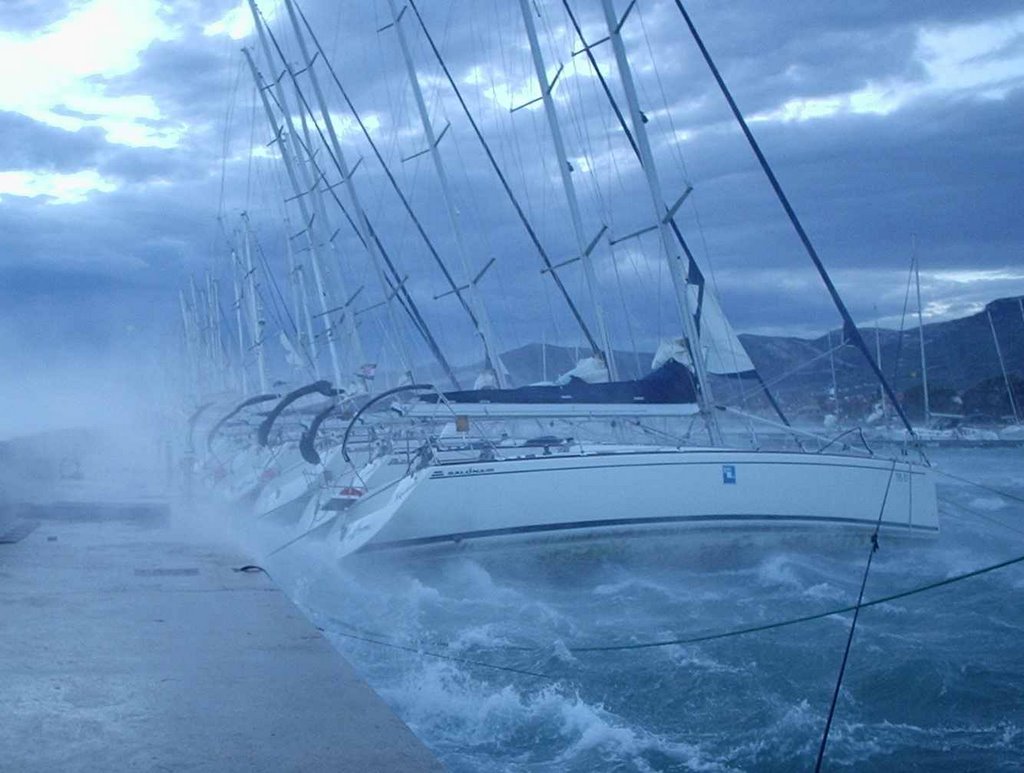
Weather wise it’s been very mixed. On Sunday we were out on the terrace basking in the warm sun, but for most of this week it has been raining. The main wind from the south is called the Jugo and it’s been vying for position with the main wind from the north, the Bora. The Bora is a biting wind that can blow for days and the Jugo brings warm humid air. We’ve also been told that the Jugo brings headaches and strange behaviour and that, some time ago, it was a good enough excuse in court to get the defendant off even the most serious of crimes. Today’s photo was taken in November 2004 when one of the worst Bora’s in Croatian history blew for 3 days. Most of the country suffered from fallen trees, debris and worse, but the police and the army had it all cleared up within a couple of days, and the relative lack of damage is a testimony to Croatian construction skills.

I have another Croatian lesson tonight and my teacher is threatening to introduce me to another grammar case with yet more different endings, when I’ve barely mastered nominative, genitive, locative and accusative. Just to illustrate the complications, proper names also change ending. The Croatian equivalent of John is Ivan and the Croatian equivalent of Jane is Ivana…but, in the accusative, Ivan changes to Ivana. So if I want to say I love John, I say “volim Ivana” which might cause some consternation to an eavesdropping English person who hasn’t got past nominative masculine and feminine yet. No offence to my Croatian teacher who is great – if anyone can get me through this challenge, she can!

Enjoy your weekend and please let me know what you think of this week’s postings.

Jane

Rabu, 22 Februari 2006

Thursday Column - Croatia Lifestyle 4: Shopping


In today’s posting we have a look at the type and variety of shops available in Croatia and what sort of shopping experience you can expect. It is based on our detailed knowledge of the area around Split and our travels around Croatia. We are indebted to four friends who live locally and seem to have antennae highly tuned to the best deals around and ears equally well tuned to the chink of cash registers as soon as a new store opens.

In looking at the Split area, in detail, we are covering a radius of about 30 miles around Split town and believe this area is typical of other similar regions such as Sibenik, Dubrovnik and Zadar. We have less experience of inland towns though we have managed to spend plenty of money in Zagreb, the capital. As far as the islands are concerned, many of the bigger towns are as well served as those on the mainland but lack the larger superstores that are found in mainland town suburbs. That makes furniture shopping a bit more expensive and time consuming if you’re equipping an island property.

Croatia seems to be following the general trend of huge out of town superstores that slowly result in the failure of the local butchers, bakers and corner shops. Within half an hour’s drive of Split there’s a large Getro, Ipercoop, Mercator, Kerum, Kaufland and Metro all designed along Tesco type lines, though Metro is for trade buyers only. Anecdotal evidence suggests that Metro, the newest store in town, has the largest stock, the best range and the cheapest prices. My favourite is Ipercoop at Kastel Sucurac, in the big Emmezete centre, with a large furniture store next door and Bricostore (an upmarket French Homebase) just a five minute walk away. Compared with three years ago, you can find almost everything you need now, in one store or another. Baked beans are a recent addition to Kaufland, Mercator has good orange marmalade, rather than the ubiquitous, not so good, “mixed fruit marmalade” and smoked salmon is now readily available. We still rely on England for tea, bacon, marmite, cheddar cheese and sausages but our list used to be much longer. You won’t find a lot of good “ready meals” but, for us, that’s no great loss. As far as prices are concerned, there’s not much difference on meat and fish but everything else seems at least 20% cheaper. Wine, beer and local spirits will save you even more. My favourite drink, Prosec, a cross between sherry and fortified desert wine, is a snip at about £3.50 a litre, good local Brandy, called Stock, is about £8 per litre and a decent bottle or red plonk is about £2 though you can splash out on Zlatan Plavac at a cost of around £10, and enjoy a really good Croatian red wine.

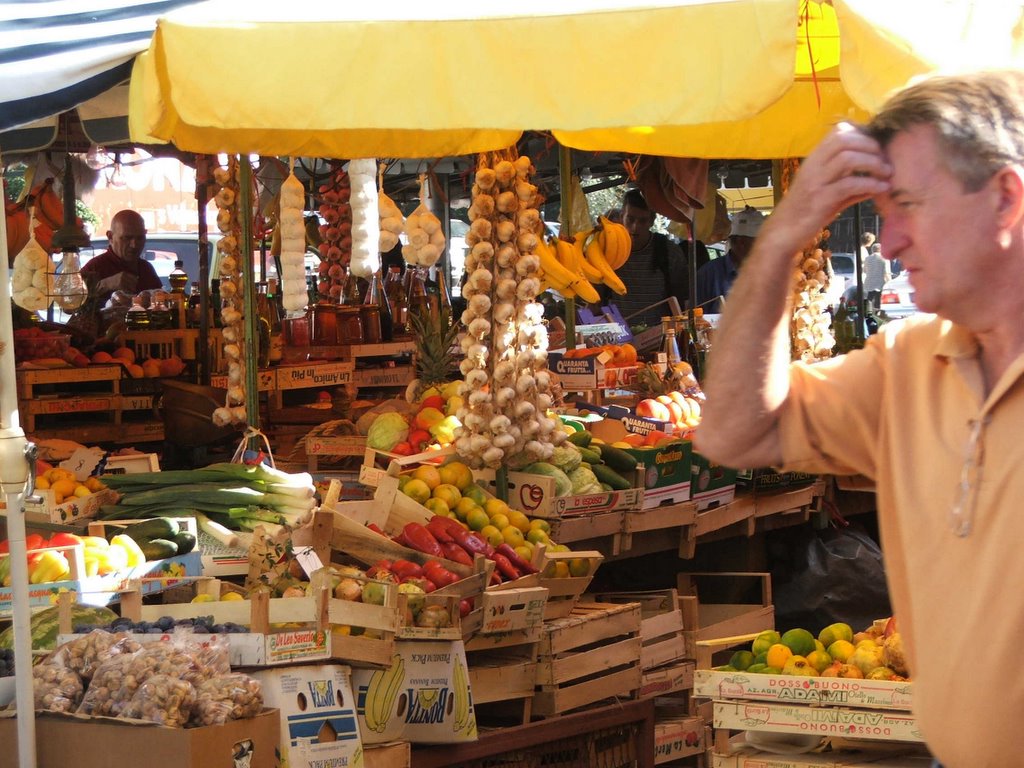
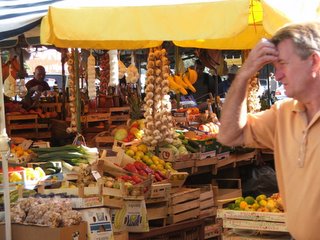
Fruit and vegetables in the large stores are of reasonable quality but tend to consist mainly of foreign imports and we like to buy Croatian where we can. You’ll do better at the local market in this respect but you need to find a vendor you can trust and will not charge you tourist prices. Croatian eggs and tomatoes are special but remember it’s only the English who buy eggs by the dozen. Home brews and home made olive oil can also be found on the market stalls but these vary greatly in quality and price. Good Croatian extra virgin olive oil is about £7 per litre at the supermarket. In the bigger towns such as Split, Trogir, Zadar and Sibenik, you’ll also find buzzing fish markets but it’s best to get there early.


The Superstores have also taken over the furniture and white goods market from the smaller shops and some of the deals are amazing, as is the quantity of stocks they hold. Pevec, in the Split Industrial Area, has acres of space devoted to wine stills, garden tools and equipment, fridges and freezers and a lot more besides. We bought two very good quality three seater leather sofas from Emmezete, next to Ipercoop, for less than £700 and you’ll find similar deals in all the Superstores. Fridges, freezers and washing machines are all very reasonably priced. The Friday papers often have inserts aimed at weekend shoppers highlighting the bargains of the weekend but there’s normally a special area in each store for heavily discounted items.

Most of the food based superstores also have a wide variety of reasonably priced clothing though the Croatian shape does not make for the best fit for those of us with more voluptuous bodies. The bigger markets also have plenty of clothes stalls and the main towns such as Split, Sibenik, Zadar, and of course Zagreb, have plenty of designer shops at higher prices. Apart from casual wear, I’ve found clothes prices not to be that different from the UK, and the choice more limited. If anything, shoes seem more expensive though there are always bargains to be had.

Bags, jewellery, hats and other luxury items are about the same price as the UK, in the shops, and vary in price in the markets. There are plenty of small boutiques where you need to be prepared to barter a little to get a good price.

And of course there’s more to Croatian shopping than Superstores and markets. The medium sized towns and villages have large supermarkets where you can buy most things, though the quality of fruit and vegetables can be very mixed and some shops are much better maintained and presented than others. Then there are the small bakeries, corner shops and butchers. Few of the owners and staff few seem to speak much English which means a whole new vocabulary to request one of the many different types of bread, an unrecognisable cut of meat, or to describe a vegetable who’s Croatian name you haven’t discovered yet. We like to patronise these shops, particularly where the staff are friendly and helpful, and in the hope that the Croatian version of traditional high streets, with good local shops and traditional skills, doesn’t go the same way as in the UK.

So what’s the shopping experience like I hear you ask? Mixed is the answer. Until recently, the policy on returns was quite severe and the burden of proof of defect was heavily on the buyer. That’s now gone full circle with a new law that says the buyer has up to six months to go back with a defect and the onus is on the seller to disprove it. Queuing in the Superstores reminds me very much of the Ikea experience. In Emmezete, for example, you have to get a ticket and go to the warehouse for the larger items. You may have to wait a long time and then find your item is out of stock. Queues in the food superstores are normally quite well managed and the staff very helpful, mostly speaking English. You have to get used to paying deposits on some glass bottles (those with no writing stamped on them) plastic bags are free, parking is normally good, you often have to have your receipt stamped by a security man as you leave, and staff usually have to weigh and price the fruit and vegetables before you go to the check out. I find the smaller supermarkets more difficult and less easy to navigate around and the small butcher shops quite daunting as the butcher’s knife is normally poised over the meat I'm looking at before I’ve had a chance to find out if it’s the one I want. This experience is only capped by the first encounter with a new market lady who would probably sell you the whole stall, roof included, if you let her.

On the whole though, the shopping experience is a good one and getting better all the time as Croatia gets more used to the obscure tastes of foreigners and becomes a little more adventurous itself. Herbs and spices used to be quite limited, and still are in the smaller towns, but you can find most of them now if you look hard enough. There’s still nothing to beat the taste of fresh, home grown, produce and the markets and roadside stalls are always full of the best of it.

Finally, a few Croatian specialities that are worth looking out for:-

Prsut – locally produced smoke ham
Livno and Pag Cheese
Fresh fish – our favourite is Orada
Travarica or Rakija – herb flavoured liqueur similar to Grapa
Orahovac – walnut flavoured brandy
Black Risotto – flavoured with the ink of the cuttlefish
Easter Cake – a little like Brioche
Bacalar – dry salted cod used to make fish stew
Pašticada – slices of beef stewed in a rich sauce
Selasa, 21 Februari 2006

Wednesday Column - Croatia Business 4:Shipbuilding Part Two


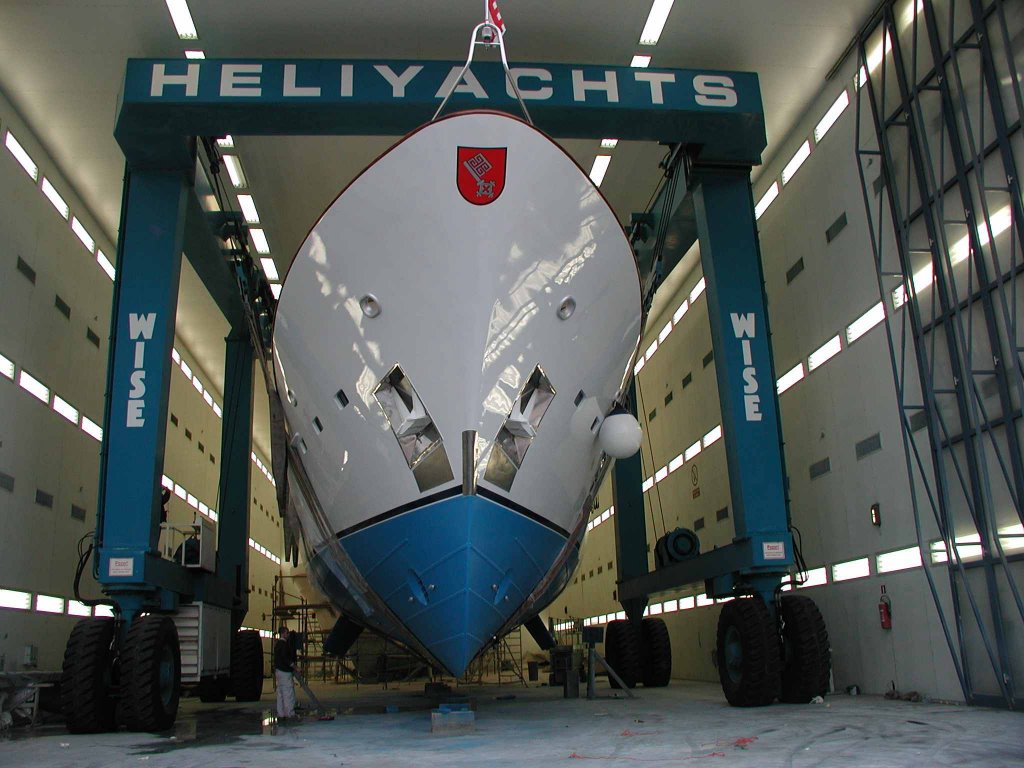
In last week’s Wednesday Business Column we looked at the state owned shipyards. Part Two focuses on the smaller privately owned yards. The biggest of these yards is Heliyachts International, based in Pula, in the northern peninsula of Istria. Heliyachts are setting the standard in the private sector. They delivered their first boat in 1998, a 33 metre classic cruising ketch, and then set out to equip the yard to cater for the building of custom made sailing and motor boats between 20 and 50 metres. The up to date workshops are spread over 1000 square metres and Heliyachts has a 200 ton travel lift. They’re currently working on a 50 metre steel motor yacht, due for delivery in 2007, and a number of refits. For more information on Heliyachts, have a look at its high tech website, http://www.heliyachts.com/.

NCP Sibenik, http://www.ncp-rbs.com/, is a relatively new entrant into the industry, having taken over an old naval repair yard in 2004. Sibenik is ideally situated, about half way along the Croatian coast line, and there are big plans to improve the area. NCP currently concentrates on refits but would like to get into the new build market. Its facilities include a 900 ton Syncrolift, a 50 ton Wise Hoist, a 1500 ton floating dock and three engine test stands for engines up to 5150 kilowatts.

Nauta Lamjana is another new entrant into the market, concentrating on refits, and has recently taken over a commercial ship repair and oil rig builder on the island of Ugljan. The web site appears to be under reconstruction at the moment - http://www.nauta-lamjana.hr/

The site of Brodogradilište Cres has been involved in the shipbuilding industry for over 100 years. A 1000 ton floating dock was installed in 1984, making a turning point in the yards history, enabling it to cope with much larger boats. It also has a 100 ton travel lift. The yard is authorised to carry out repairs on steel ships up to 12,000 tons, wooden and fibre glass ships of any size, and to build wooden ships of up to 15 metres in length. The yard is located in Cres town on Cres island, the largest of Croatia’s islands. Their informative website can be found at http://www.brodogradiliste-cres.hr/

Shipyard Leda, http://www.shipyard-leda.hr/, formerly known as Inkobrod, is based on Korcula island and specialises in naval architecture. It has a 100 ton crane, manufactures sections for larger shipyards, has acquired a reputation in modifications to eg hatches and ramps, and builds and refits smaller boats.

The shipyard at Betina, Murter, has a 240 ton crane, good facilities and has established a serious reputation in refurbishment and refit. The website is http://www.shipyard-betina.com/, but at the time of writing the information was limited and some of the links between pages were broken.

Brodogradilište Punat, http://www.shipyard-punat.com/, has a 100 ton travel lift, three slipways (160, 450 and 600 tons) and offers a range of refit and repair services.

I believe this to be a reasonably complete list of the main players in the market, based on local knowledge, supplemented by what I have gleaned from the net. If I have left anyone out, please let me know. There is a big gap for a directory of nautical services/shipyards in Croatia and the internet resources in this respect leave something to be desired. We’ve had to build up our database from scratch over a number of years though it’s good to see that The Croatian Chamber of Commerce are now trying to pull some of this information together.

Complete or not, the Croatians obviously have a firm foothold in various sectors of the shipbuilding and ship repair industry and this part of the economy looks set to grow. Heliyachts and NCP are clearly pitching their services at the superyacht industry and lets hope they get a bit more help from the government than they have in the past year. No sooner had Croatia come back onto the map as a desirable destination for large yachts, than the government effectively killed the interest with mystifying new laws. Generously, these new laws were designed to prevent the black charter industry, cynically they were nationalistic and protective, practically they may have frightened off what could have been, and still could be, an important source of income, as well as a lot of goodwill from genuine exceptions that don’t quite fit into the hard line, and some would say unworkable, legislation. As far as Heliyachts and NCP are concerned, let’s hope that superyachts feel welcome again in Croatia soon.

Senin, 20 Februari 2006

Tuesday Column - Croatia Tourism 4: Holiday Apartments


Almost everyone with a spare plot of land in Croatia seems to be cashing in on the burgeoning tourist industry and building an apartment to let. A few buildings have already been knocked down because they didn’t have planning permission and facilities and standards vary greatly. Don't set too much store by the number of stars an owner awards themself! Booking through an established travel agency is probably safer but you’ll pay more and miss out on the chance to find that special apartment in a superb location. If you book direct with an owner then you are taking a measured risk. Most private owners aren’t equipped to take deposits easily and tend to rely on passing trade to fill their accommodation in the summer. Those that have taken advance bookings in the past have, quite often, been let down by visitors finding something better en route. Do therefore make sure that the owner knows you are definitely coming so he isn’t tempted to take the bird in hand. Croatians though, on the whole, are a very honourable race and there are an increasing number of Brits who have properties to let along the coastline and on the islands.

If you wait to find accommodation until you arrive at your destination, you may end up with the perfect choice but could be left high and dry in the height of summer. However, in my view, this is the best option if you are reasonably flexible. The supply outstrips demand and you can do a much better deal face to face, especially if you are staying for over three days in the same place. Be aware that many owners just won’t consider lets of less than three days, whatever price you offer.

Most main tourist destinations have tourist offices that may have some favoured apartments, you’ll see plenty of signs along the roadside and there’s normally a coven of matriarchs with placards, hovering around arriving ferries at the larger towns. My advice is to pick your destination, get there in the morning or early afternoon if possible, and just walk around till you find your favourite spot. There’s bound to be a few apartments to choose from and you can inspect as many as you like before making a choice.

Before committing, check everything works and make sure that there’s air conditioning, if you need it, or some form of heating in the cooler months. Also make sure there are no night clubs near by if you want a good nights sleep. You normally won’t be asked to pay until the end, normally in cash, but expect to leave your passports with the owner.

We’ve stayed in plenty of apartments around Croatia, always had plenty of choice and never had a bad experience, though some have been better than others. Generally the apartments are fully self catering with clean bedding and towels provided, and sometimes changed on a regular basis. You’ll normally get a lot more space for your money than you would in a hotel – up to three bedrooms for €40 a nightin July, though prices are on the up and vary according to the month. Obviously, if you’re travelling with young children, or a large family, you may want to exchange the additional choice and value for money for the peace of mind of a confirmed apartment booked with a reputable company that specialises in Croatia.

Finally, note that the tourist season is still very short and the majority of apartments are not available outside July and August. So don’t expect to find this type of accommodation in the smaller towns in spring and autumn.